Sonny Lofthus
The SonSonny Lofthus is at once a convicted killer, a model prisoner, and a figure onto whom other people project ideas of guilt and grace. His story begins with the collapse of a promising adolescence after his father, Ab Lofthus, is found dead beside a suicide note confessing to corruption; years later, a revelation about that death makes Sonny’s own identity—and the crimes for which he has been imprisoned—part of a larger reckoning.
Identity and Background
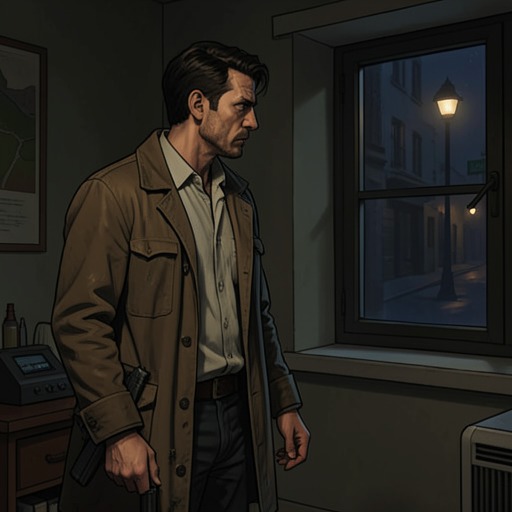
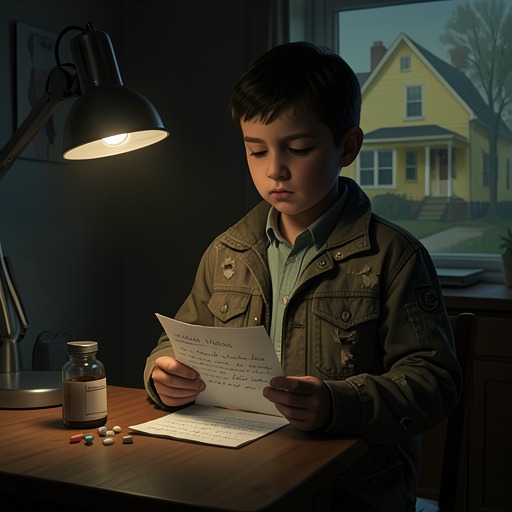
As a schoolboy, Sonny was a star pupil, a talented wrestler, popular with his classmates, and known for helping others. A teacher testified that he had wanted to follow Ab into police work. That ambition makes his later criminal identity especially stark: the son who once imagined joining the police becomes a prisoner whose life is bound up with the institution’s concealed failures.
Ab’s death marked the break. After the body was found beside the suicide note, Sonny stopped attending school. A former teacher later described him as having gone off the rails, getting into trouble, pushing people away, and deliberately isolating himself. His mother, Helene, also fell apart after the death and died from an overdose of sleeping pills. The evidence links Sonny’s loss of both parents to a devastating change in his life, without reducing his later choices to that loss alone.
At eighteen, Sonny confessed to two murders and was sent to prison. His record and the crimes attributed to him define how outsiders first understand him. Yet the novel repeatedly places those labels beside evidence that complicates them: he had been a promising, helpful child; other inmates trust him with their secrets; and the truth about Ab’s death remains unresolved long after Sonny has been convicted.
Life in Prison and the Confessor’s Role
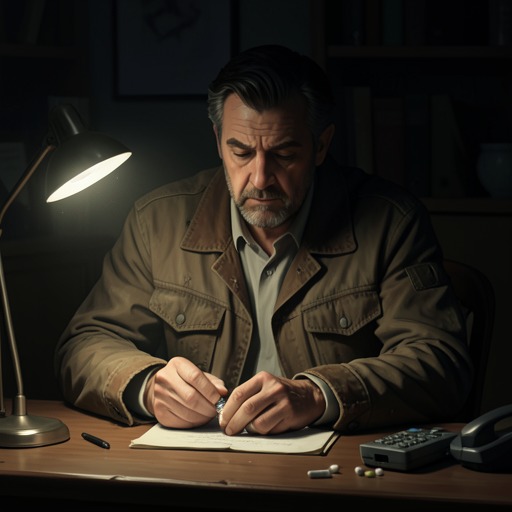
At Oslo jail, Sonny is described as a model prisoner. He listens to other inmates confess their sins and absolves them. Some prisoners whisper that he is serving time for someone else, and that his role goes beyond hearing their stories: perhaps he is confessing to their crimes as well. The rumour turns his quiet presence into a moral puzzle, while leaving its literal truth unsettled.
A prison chaplain recognizes what draws the inmates to Sonny: he listens without visible reaction or judgment. The chaplain has spent his own life trying to cultivate that openness, but suspects that his religious purpose gives his listening an agenda. Sonny’s silence, by contrast, seems to ask nothing of the person speaking. The contrast helps explain how a convicted murderer can acquire a reputation for spiritual authority without the novel simply declaring him innocent or saintly.
That reputation travels beyond the prison. At the Ila Centre, a woman confronts Sonny with the name “Buddha with the Sword,” recalling that former inmates have described him as a kind of saint. She rejects the elevation, insisting that he is mortal like the other people who pass through the centre. The exchange sets his public myth against his vulnerability and the danger of the course he is pursuing: he loves someone, kills, and appears to be doing everything possible to get himself killed.
The Father’s Death and the Hidden Mole
For years, rumours circulated about a police mole who leaked information to the person directing much of Oslo’s drug and sex trafficking. The rumours remained unproven, and the question of who had helped the criminal organization persisted. Sonny eventually identifies two questions as decisive: who killed his father, and who was the mole who helped the Twin. His search joins a private family mystery to a wider investigation into institutional betrayal.
The answer to the first question is not the account Sonny had been given. He is told directly that Ab did not shoot himself. In Ab’s diary, an entry describes how police officers discussing the suspected mole assume there must be a single traitor. The writer points out that two collaborators could evade suspicion by giving each other alibis, while describing the corruption as extending to turning a blind eye to drugs, human trafficking, and murder. The diary’s first-person voice exposes the reasoning of people inside the corrupt arrangement, rather than merely repeating the public rumour of one hidden informant.
Simon Kefas eventually tells Sonny, “I was the mole.” The confession names a trusted police officer as the person Sonny has been seeking. It also reframes Sonny’s history: the question is no longer only what his father did or whether the official account of Ab’s death can be believed, but how Simon’s betrayal helped shape what happened to the family. The novel makes the confession an intimate confrontation as well as an investigative disclosure; Simon looks up at Sonny’s clear, mild eyes before admitting the truth.
Escape, Return, and Public Reputation
Sonny’s escape does not erase the state’s view of him as dangerous. When Delta’s presence is challenged, his six attributed killings are cited as justification. That official description is categorical, even as the story has already shown a more uncertain picture of the man behind it: a prisoner who listens to other people’s confessions and a son still pursuing answers about his father.
His movements intersect with people who knew him before prison. A woman recognizes that Sonny used to live at a particular house; he answers that his parents are no longer alive. The exchange compresses his disrupted family history into a brief acknowledgment, while making clear that home is no longer the stable place it once represented. In another encounter, Martha is in reception as Sonny passes straight by her. The moment records distance between them without explaining it away or assigning a motive that the scene does not establish.
The story also shows Sonny refusing to turn every confrontation into retaliation. When Anders grabs him and strikes at him, Sonny ducks, turns, and holds Anders in a way that leaves him helpless. Then he lets him go. Anders continues punching him while Sonny stands with his arms at his sides. The reversal matters: Sonny is capable of controlling the encounter, but the scene’s outcome is his decision to release Anders, not to answer each blow with further violence.
Relationships, Choices, and Significance
Sonny’s relationship to Ab is the central inheritance he must examine. As a boy, he wanted to become a police officer like his father; after Ab’s apparent suicide, that future collapses. When Sonny hears that his father did not kill himself, his pursuit of the truth becomes inseparable from his effort to understand what kind of man Ab was and what had been concealed from him. The final disclosure that Simon was the mole gives that inquiry a personal and institutional answer, though the supplied scenes do not resolve every consequence of the revelation.
His place among other inmates rests on a striking paradox. They bring him confessions, and he listens without judgment; meanwhile, the prison and the police define him through his own confession and the murders attributed to him. Neither role cancels the other. The rumour that he may be taking responsibility for other people’s crimes remains a rumour, but its persistence reflects the gap between the official record and the moral meaning other prisoners attach to his conduct.
Sonny’s story therefore tests the difference between appearing guilty, being treated as a saint, and knowing the truth about a family’s past. He is called a killer and an almost-saint, while his father’s supposed suicide proves false and the police mole turns out to be someone within the law. The final exchange points toward a possible standard for breaking that inheritance: Sonny recalls Simon’s statement that a son’s responsibility is not to resemble his father, but to be better than him. It is not a simple absolution. It is a demand Sonny can only meet through what he chooses to do with the truth.